Showing posts with label literature. Show all posts

Monday, 4 July 2011

A christmas Carol - Charles Dickens


Well well well, i'm sure that everybody had heard about or even read Charles Dickens' Oliver Twist, but i won't talk about this big classical, i just want to share with you some of my thoughts about Dickens' tales.

I've decided to write something about Dickens' tales because in last September, i found an old Dickens book, the kind of beautiful book with hard covers and elegant illustrations, you know (always a pleasure to hold these beautiful books!!). I read "A Christmas Carol" when i was younger, about 12 years old, and it left me a strong impression. I was really happy to find the book last September.

There're three tales in this book titled "Christmas Carols" which are: "A Christmas Carol", "Spirits of the Bells" and "the Cricket on the Hearth".

Maybe it's strange to tell you that i love this kind of tales which have happy ending, i might appear silly to find that these tales bring me comfort and scare me at the same time. But Charles Dickens describes so well fantastic scenes that i imagine i'm a part of the story and i'm in somekind the observer of these poor people in their misery and stay powerless in front of their despair.

If the main character of the first tale is a rich old man (Scrooge), in the two other tales, main characters all belong to poor working class, those who work hard everyday and earn just enough to survive. And the three tales depict life conditions of this poor class in winter, at Christmas day or in new year.

After a hard year, these people finish with no money, no opulent feasts, no beautiful clothes but always with cheerfulness, good humor and a lot of love for each other. Dickens shows, with skill, the rich people's world, where there's no place for happiness, no place for love, no place for simplicity. They're just concernned by money, by how to make more money, and they can go up to steel the meager diner of a poor trotter (spirits of the bells) while they tell him what to do to stay in the right way just before new year.

And those who claim to be friends of the poor, they're even more reprehensible and despicable because under this "honorable" status, there're cruelty and unhealthy pride. For them, poor people are just like animals, they all need someone of the upper class to guide them and to tell them what to do, otherwise, these poor morrons will fall into crime, alcohol and other "bad" habits!

At the end, readers only find love and cheerfulness in poor homes where people live from hand to mouth without phylosophy or metaphysical problems because it's them who possess the real meaning of life and its good phylosophy.

A pure happy moment with Dickens. We cry, we are outraged, we shout at human nature and at the end, we're happy because where there is love, there is Life and Happiness.

Monday, 12 July 2010

Lily of the valley - Honoré de Balzac


Here i am again, on my blog, and to write about one of my favourite classical novel: "Lily of the valley" of Balzac.

Balzac is one of my favourtite writer, brought to me by my father when i was too young to read this kind of novel (according to elders), but he was right to tell me about Balzac because his works have such a huge influence in my life now, in all my creations, all my thoughs. I love the way he describes people, their innocence, their joy, and their pain, each detail is important. I love the way he talks about LIFE, with all its cruelty, its pretence, its complications, and certainly, its sweet moments...

"Lily of the valley" is one of his novel which is hardly criticized, sometimes the critics are unfair. For me, this novel is the most sensual, the purest one among the others, it's about the love story between the young aristocrate
Félix de Vandenesse and the countess Madame de Mortsauf.

Its a platonic but intense love, two personne desire each other but the woman is too virtuous to betray her tyranic husband, and the man doesn't dare to go further in the relationship because of his respect toward the countess, and their love last until the death of the countess, due to a heart disease.

It's a beautiful love story. You may think this kind of love story existes only in novel but who can be sure that in real life, there are not two persons like this, somewhere in this huge world? :) Throughout the novel, Balzac describes how the two caracters met, how their relationship envolved and how things passed with the count (husband of Madame de Mortsauf), the evolution of the young aristocrate beyond the court, his meeting with another woman who teached him about carnal pleasure, and how this relationship worsened the heart problem of the countess.

If you like classical novels, historic romantic stuffs, then "Lily of the valley" is an excellent sentimental education book, where Balzac shows you how great love can be and how a woman can love you 'til her death.

Certainly, ther're another great novel of Balzac such as "Father Goriot", "Eugénie Grandet", "the girl with golden eyes", "Cousin Bette", "The old girl" or "Lost illusions", and a lot, a lot, a lot of others great novels. Balzac created a new fantastic in litterature, not as a kind of litterature but a kind of reality. It's in real life that mystery and horror of "Skin of sorrow" (la peau de chagrin) are revealed, the fantastic elements existe without magical objects, it is nourished with the real life, in according with the situations and the characters.

With his own "fantastic", Balzac obliges his readers to consider thing differently to see its real essence, and the realisme of Balzac reaches the "surreal" philosophic with his "fantastic"!

Sunday, 4 April 2010

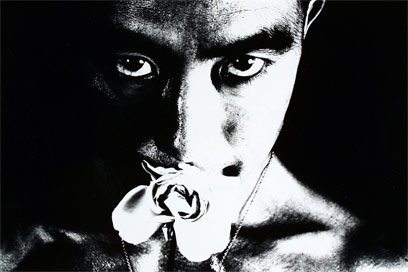
Yukio Mishima"s short stories


Okay, i admit it. Here's an another modern literature author, but it's what i read these times. I promise, i'll write about a classical novel soon. :)

I don't want to talk a lot about Mishima's life, a little trip on wikipedia (http://en.wikipedia.org/wiki/Yukio_Mishima) will give you complete information about his life. What i want to talk about here are his wonderful short stories.

It was with pure chance that my eyes stopped in front of a short stories book of a japanese author.Usually, europeen short stories are plus atractives for me, i don't know why (^^') but i was pretty curious when seeing Mishima's book, so i bought it. And you know what? After finishing the book, i went to the bookstore and bought an another short stories book of Mishima. :)

Why short stories? Because before buying a novel, i prefer discover an author with his/her short stories except when the author doesn't write short stories at all. :) And secondly, i take bus ans subway every day to go to university, so short stories are pratical for the travel. :)

Okay okay, i'll stop chatting to talk about Mishima's short stories. :)

I love the atmosphere created by Mishima: dense, heavy and light at the same time, a little bit nostalgic. His characters are rich in emotions, strage and surprising in their way of thinking, sometimes contained, sometimes explosive.

In "Butterfly", the tone is for nostalgia, the character is passive and calm, he containes a platonic love for a married woman. The whole story is a calm long river but very dense and it obliges you to follow the flow until the end. And the end leaves you in your own reflexion, in questions about your life, in a strage feeling.

With "Lioness", Mishima offers us a real portrait of japanese femme fatal: beautiful, intelligent, passionate and, surely, dangerous. A character torn between love and hatred, painted ingeniously.

An another femme fatal portrait, this time, more pathetic, more desperate in "Dojoji". A weird play (yes, Mishima write plays, too) which shows us how a woman can appear unreasonable, immoral and strage when she's in love.

Some japanese folklores with "seven bridges", a weird story that leaves you with this strage feeling you have when a film or a song is unfinished, however the story would be bad if Mishima continued it, if he would added some details, some circumstances. This story is just a jewel.

Violence, love, patriotism, innocence, and passion are poetically paint in "Patriotism". Never a Seppuku can be more beautiful, more meaning and more horrible than that of lieutenant Shinji. Never a sexual act can be more poetic, more passionate, more pure and more graceful than that between the lieutenant Shinji and Reiko, his wife. There is something pasionate, something innocent and unfinished in this story, a real beautiful one.

Once more time, a modern author leaves me wordless with his stories. If you're a fan of litterature which is light, dense, nostalgia, with unfinished feeling, with a combination of delicacy and rough style, Mishima is your author!!

Monday, 18 January 2010

Butterfly of the stars


This summer, i'd occasion to read Bernard Werber's "Le Papillon des Étoiles", which means "Butterfly of the stars".

Bernard Werber is one of my favourite french writers. I am not a fan of modern litterature but Bernard Werber is one of some exceptions. I love the way he sees and interprets things. I was very amused the first time i read his books. His books are the best way to refresh yourself and see life with brand new eyes. They're amusing to read and teach us a lot of things.

"Butterfly of the stars" tells us about adventure of a scientist, a shailing ship navigator, a billionaire and their followers in a project which aimes to escape from the blessing Earth. In fact, there're too much war, too much destruction and too much calamity on Earth at that state and they all think that the Earth will become a dead land and the best way to do is to flee.
The scientist conceives a spaceship which runs with solar energy and it has a butterfly form, the billionaire helps him financially to construct the spaceship with others scientists, engineers and wokers and the shailing ship navigator sails the spaceship.
After a lot of barriers and defeats, the butterfly of the stars is finally ready to fly. People come to life and die in the spaceship. After 1000 years, the spaceship reach the final destination, a new planet, but there are only 4 humans alive, a girl and 3 boys and the only little spaceship which helps them to land on the new planet can only containt two persons, the girl is naturally chosen. A choice was made between 3 boys, and the couple leave the spaceship to the new planet...

After the book, I wondered if Human is not reproducing a diagram that our ancestors had done before with an another planet, an another "Earth"? And are we condemned to repeat our silly things again and again and again, and then to be obliged to find a way to escape from the consequences of our silly acts? Finally, if the Earth becomes a dead land, where will we go, what would we become? If we don't stop the destruction, is there an another planet out there which will accept us? and in this case, would we act more wisely or the diagram will be repeated and this planet will soon be destroyed?

"Butterfly of the stars" is a good and instructive book to read and a treat to our own reflexion.